
BBAU study maps 50 years of library research: digital preservation is now the dominant theme
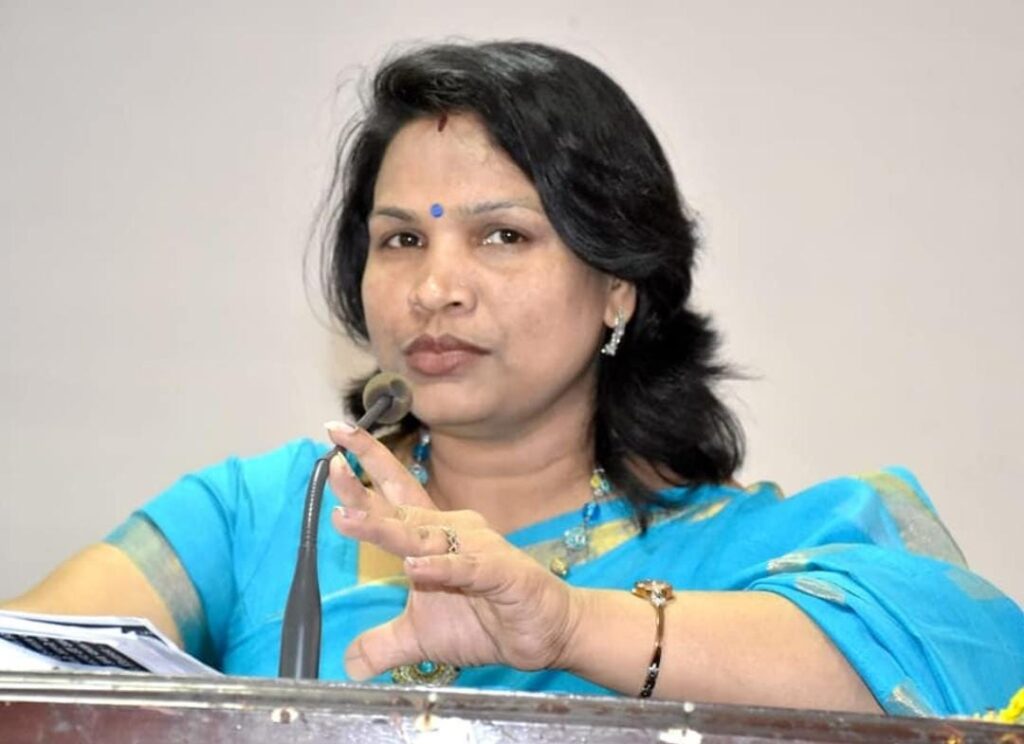
Lucknow: Vikrant Dubey, research scholar, and Prof. Shilpi Verma, Dean of the School of Information Science and Technology, both from the Department of Library and Information Science, Babasaheb Bhimrao Ambedkar University, Lucknow, have published a study that uses machine learning to identify what library and information science research has actually focused on over the past five decades.
The researchers acknowledged the support and encouragement of the Hon’ble Vice-Chancellor, Prof. Raj Kumar Mittal, whose emphasis on research with practical value shaped the direction of the work.
The paper appears in the September 2026 issue of the DESIDOC Journal of Library & Information Technology (Vol. 46, No. 5, pp. 569–576), a Q2 journal in Library and Information Sciences on the Scopus/SCImago listing. It is indexed in Scopus, Web of Science (ESCI), Dimensions, LISA, LISTA, EBSCO, ProQuest, Indian Citation Index and Google Scholar.
Applying Latent Dirichlet Allocation to 279 Scopus-indexed publications from 1974 to 2024, the authors found five themes. Digital preservation and library information science accounted for roughly 30 per cent of the topical distribution. Bibliometric research, digital library services, and online learning each took about 20 per cent, while emerging trends made up the remaining 10 per cent. Publication activity was low before 1995, rose after 2000 and peaked between 2015 and 2020, the period in which NDLI and e-ShodhSindhu were introduced.
The study sets out what the findings mean in practice. The authors write that the prominence of preservation research shows why Indian libraries need to follow global standards such as OAIS and PREMIS and distributed preservation models, strengthen digital infrastructure, improve metadata quality and adopt long-term archival strategies. The steady presence of bibliometric and digital service themes, they argue, points to the need to build professional capacity in data analytics, text mining, visualisation tools and digital service orchestration, and they suggest that stronger national and international partnerships would help in open-access publishing, digital preservation and computationally supported library services. Their broader claim is that topic-modelling results of this kind can feed directly into strategic planning and capacity building across the LIS sector.
Comparing Indian and global practice, the paper notes that preservation abroad is supported by collaborative work such as LOCKSS, OAIS-based standards and Europe’s Plan S, and increasingly by AI tools that predict file degradation and generate metadata automatically. India has made progress through the large-scale digitisation of NDLI, institutional repositories such as INFLIBNET’s Shodhganga and secure archival systems in defence libraries, but AI-based preservation, automation and advanced analytics remain new here. The authors make a similar observation about bibliometrics, where international work now uses altmetrics, network visualisation and algorithmic mapping while Indian research stays largely descriptive, and about digital services, where platforms such as SWAYAM and e-ShodhSindhu are in place but learning analytics is barely integrated. The smallest theme in the corpus covers the frontier of the field: blockchain-based digital rights management, AI-assisted cataloguing, AR and VR applications, and smart library infrastructure.
On this occasion, other teachers, research scholars and students also congratulated researchers Vikrant Dubey and Prof. Shilpi Verma.


 ---------------------------------------------------------------------------------------
 ----------------------------------------------------------------------------------------
 ---------------------------------------------------------------------------------------------
------
---------------------------------------------------------------------------------------------
---------------------------------------------------------------------------------------------------