
National Seminar on Health Governance Inaugurated at BBAU; Experts Deliberate on Inclusive and Equitable Healthcare Services
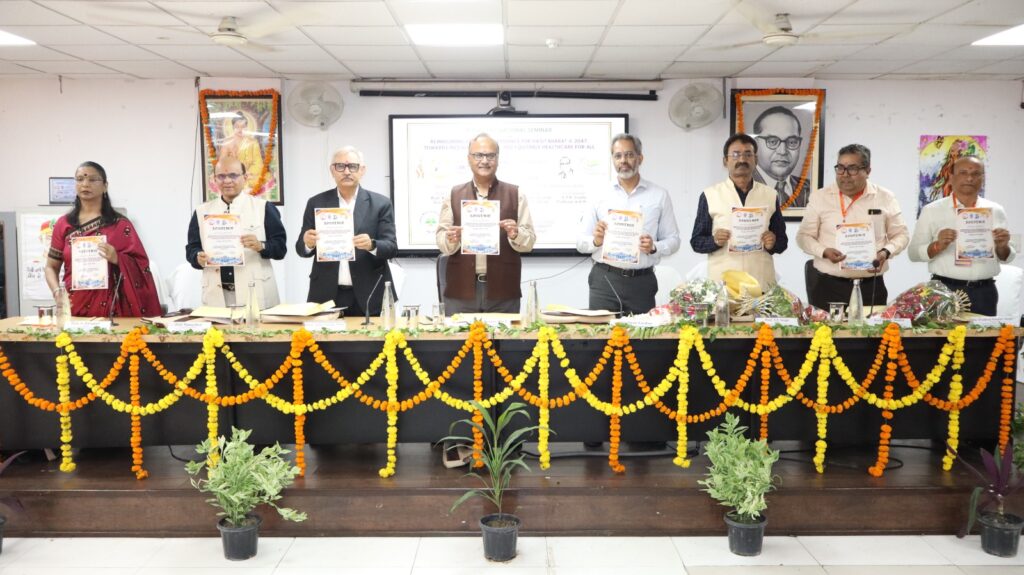
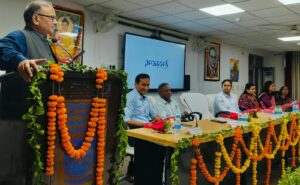
Lucknow: Babasaheb Bhimrao Ambedkar University (BBAU), Lucknow, inaugurated a two-day national seminar on October 29, organized by the Department of Public Administration on the theme, “Reimagining Health Governance for Viksit Bharat @2047: Towards Inclusive, Resilient and Equitable Healthcare for All.” The seminar is sponsored by the Indian Council of Social Science Research (ICSSR), New Delhi, and is being organized jointly with Samagra Chintan, Awadh Prant, Uttar Pradesh. The programme was presided over by the Vice Chancellor of the University, Prof. Raj Kumar Mittal. Dr. Milind Vardhan, General Manager, National Health Mission (NHM), attended as the Chief Guest. Other dignitaries present on the dais included Prof. A.S. Malik, former Vice Chancellor of Chaudhary Devi Lal University, Sirsa, Haryana, Prof. Manoj Dixit, former Vice Chancellor of Maharaja Ganga Singh University, Bikaner, and Dr. Rammanohar Lohia Avadh University, Ayodhya, Prof. T.P. Singh, Head of the Department of Public Administration, Banaras Hindu University, Varanasi, Prof. Shura Darapuri, Dean of the Ambedkar School of Social Sciences, BBAU, Prof. O.P.B. Shukla, Head of the Department of Public Administration and Dr. Pradeep Kumar Singh, Convenor of the programme. The programme commenced with the lighting of the ceremonial lamp and the offering of floral tributes to the portrait of Babasaheb Dr. B.R. Ambedkar. This was followed by the University Kulgeet. The organizing committee welcomed the dignitaries and faculty members by presenting bouquets. Prof. Shura Darapuri extended a formal welcome to all the participants, after which Dr. Pradeep Kumar Singh briefed the gathering on the objectives and outline of the seminar.
Vice Chancellor Prof. Raj Kumar Mittal, while sharing his views, stated that the healthcare sector has witnessed remarkable progress in recent times. He emphasized the need to establish better coordination between healthcare and other sectors to develop an effective and inclusive healthcare system that addresses the changing needs of society. He observed that, considering present circumstances and future challenges, a shift in the approach towards healthcare is essential. Healthcare must not be confined merely to treatment but should also be integrated with ethical values, human sensitivity and social responsibility. He stressed the need to build a system that ensures equal opportunities, quality healthcare and equitable facilities for every individual, along with transparency and accountability. Prof. Mittal further highlighted India’s rich and ancient medical heritage. He noted that Maharishi Patanjali emphasized the importance of physical and mental well-being through yoga, while Acharya Charaka and Acharya Sushruta made significant contributions to medical science and surgery through the Charaka Samhita and the Sushruta Samhita, respectively. He stated that the Indian knowledge tradition has always viewed health as an integral component of overall well-being. There is a need to integrate this rich heritage with modern medical science, research and technological innovations. He emphasized developing a healthcare system based on inclusivity, equality, ethics and accountability to ensure accessible, affordable and quality healthcare for every citizen.
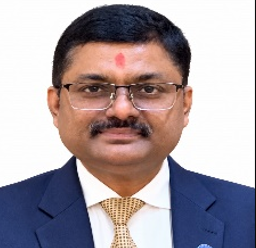
Chief Guest Dr. Milind Vardhan, General Manager of the National Health Mission, stated that investment in India should not be viewed solely from the perspective of economic returns but also in terms of investment in fundamental sectors such as education, nutrition and healthcare. Investment in these areas is crucial for the country’s future and the development of its human resources. Expressing concern over negligence towards health, he observed that many precious lives are lost due to the lack of timely medical facilities, adequate nutrition and effective healthcare services. He elaborated on various aspects of birth rates and mortality rates, emphasizing the need to improve maternal and child health, reduce mortality and ensure access to quality healthcare for all. He further stressed that adequate investment in the healthcare sector, along with awareness and coordinated efforts, is essential for building an inclusive, resilient and accountable healthcare system.
Prof. A.S. Malik, former Vice Chancellor of Chaudhary Devi Lal University, Sirsa, Haryana, stated that the second decade of the 21st century witnessed numerous challenges in the healthcare sector, necessitating the development of an inclusive and effective healthcare system. Highlighting various aspects of healthcare accessibility and availability in the context of economic liberalization, he emphasized the need for equality, coordination and harmony between the public and private sectors. He stated that government and private healthcare systems should not be viewed merely as competitors but should work through mutual cooperation and participation. The effective utilization of the capacities and resources of both sectors can make healthcare services more accessible, affordable and qualitative, ensuring better medical facilities for every section of society. Prof. Manoj Dixit, former Vice Chancellor of Maharaja Ganga Singh University, Bikaner, and Dr. Rammanohar Lohia Avadh University, Ayodhya, emphasized that a country’s development requires a thorough understanding of societal problems and effective efforts towards addressing them. He stated that India should formulate policies and programmes based on its own development indicators, keeping in view its social, cultural and economic circumstances. Elaborating on the differences between Western and Indian concepts of development, he observed that the Western understanding of development is primarily based on a linear approach that emphasizes individual progress and achievements, whereas the Indian perspective focuses on collective welfare, social harmony and holistic development. He stressed that India’s development journey must give due importance to its indigenous knowledge traditions, social needs and human values, ensuring that the benefits of development reach every section of society and contribute to building an inclusive, equitable and self-reliant nation.
Prof. T.P. Singh, Head of the Department of Public Administration at Banaras Hindu University, Varanasi, stated that policies related to health and development should not be evaluated solely on the basis of statistics and economic progress but also in terms of their actual social impact. He observed that the success of an effective healthcare system depends on the extent to which it addresses the needs of the most vulnerable sections of society. For this purpose, better coordination among healthcare services, education, nutrition and social awareness is essential. He emphasized that India should adopt a development model that takes into account local conditions, population needs and social diversity, while giving due priority to human sensitivity and equal opportunities alongside technological innovation.
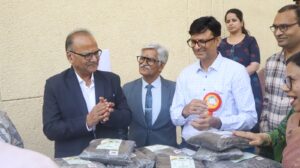
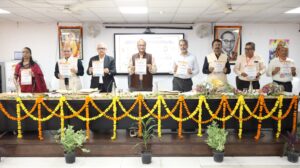
On this occasion, the souvenir of the seminar was released by the organizing committee. The programme concluded with the presentation of mementoes and shawls to the dignitaries and faculty members as a gesture of appreciation and gratitude.

Three technical sessions and a panel discussion were also organized for the participants as part of the seminar.
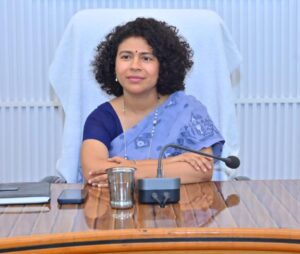
Prof. S. Victor Babu, Dean of Academic Affairs, Prof. Shilpi Verma, Director of IQAC, Deans and Heads of various departments, faculty members, non-teaching staff, research scholars and students were present.







 https://www.youtube.com/watch?si=RtToJsBhYBatUrym&v=mOuYNSdhjHA&feature=youtu.be