

Dr. Yusuf Akhtar and Dr. Gauri Shankar crack Key Survival Secrets of the TB Bacterium Tuberculosis (TB) remains one of the deadliest infectious diseases on Earth
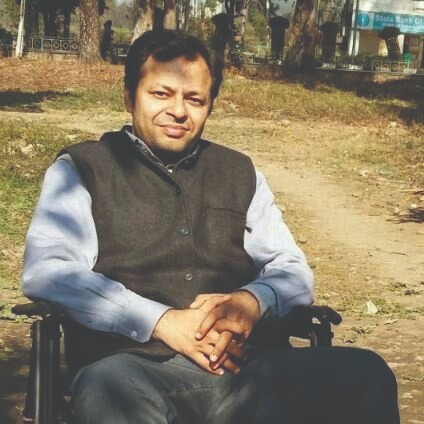
Dr. Yusuf Akhter and his PhD student, Dr. Gauri Shankar of the Department of Biotechnology at BBAU have uncovered a key mechanism by which Mycobacterium tuberculosis, the bacterium responsible for TB, survives inside the human body even when the immune system tries to starve it of essential nutrients. Their findings have been published in BioMetals, an internationally reputed journal of Springer Nature. Science can be understood simply: when TB bacteria enter the body, the immune system locks away iron inside specialised proteins to deprive them of this nutrient, which bacteria need for energy production, DNA synthesis, and virtually every vital function. For most pathogens, this strategy is effective. But the TB bacterium has evolved a sophisticated counter-strategy. The BBAU researchers discovered that upon sensing iron scarcity, the bacterium activates a set of genes that produce substances called siderophores, powerful biological molecules that act like magnets, extracting iron from the body’s own cells and pulling it back into the bacterial cell. This allows the bacteria to continue growing and surviving inside a deliberately hostile, iron-starved environment. The key genes responsible, including mbtA, mbtB, mbtE, and mbtI, were found to be powerfully activated under iron-limited conditions. Genes linked to immune evasion, including members of the PE/PPE family and the ESX secretion system, were also found to be simultaneously active, revealing a coordinated link between iron theft and the ability of the bacterium to hide from immune detection.
According to the World Health Organization (WHO), approximately 10.8 million people fell sick with TB in 2023 and around 1.25 million died, roughly one death every 25 seconds. In India, the burden is the heaviest in the world. India accounts for 25% of all new TB cases globally, and every year approximately 3.2 lakh Indians (320,000 people) lose their lives to the disease, amounting to nearly 880 deaths every single day. Around 40% of India’s entire population is estimated to carry the TB bacteria in a dormant form, silently awaiting an opportunity to become an active disease.
What makes the situation more alarming is the growing menace of drug-resistant TB, which is rapidly outpacing the medicines available to treat it. TB was traditionally treated with two powerful antibiotics, isoniazid and rifampicin. When patients stopped treatment midway, or received incorrect prescriptions, a persistent problem in India where studies have documented dozens of non-standard drug regimens being prescribed in the private sector, the bacteria survived, adapted, and became resistant. This produced Multidrug-Resistant TB (MDR-TB), in which the bacteria no longer respond to both primary drugs. Treatment of MDR-TB demands expensive second-line medicines taken over 18 to 24 months, often causing severe side effects, including hearing loss and liver damage. Globally, around 400,000 new MDR-TB cases are estimated every year, resulting in approximately 150,000 deaths annually from drug resistance alone. India bears a disproportionate share: it accounts for 32% of all MDR-TB cases in the world. Even more frightening is Extensively Drug-Resistant TB (XDR-TB), which resists not only first-line drugs but also the most powerful second-line treatments, sometimes leaving patients with no viable medical option at all. Globally, only about two in five MDR-TB patients accessed proper treatment in 2024, and India’s treatment success rate for XDR-TB stands at only 68%. The world urgently needs a new generation of approaches, ones that attack TB through entirely different biological pathways that resistant bacteria have not yet learned to defeat.
A particularly important finding is that the TB bacterium follows a structured three-phase survival strategy when iron becomes scarce. In the first phase, it immediately switches on its iron-acquisition genes and begins producing siderophores at high levels. In the second phase, it simultaneously shuts down its own iron-consuming processes, entering a metabolic power-saving mode that reduces dependence on the nutrient it cannot access. In the third phase, the bacterium undergoes deeper physiological changes that allow it to remain dormant inside the body for months or even years, the state known as latent TB, reactivating only when host immunity weakens due to old age, malnutrition, diabetes, or HIV infection. This phased response, coordinated by iron-sensitive molecular switches, explains why TB is so extraordinarily difficult to eliminate completely and why it can hide silently in the body for years before causing disease. The broader implication for the MDR and XDR-TB crisis is profound: even the most drug-resistant strains of TB cannot escape their fundamental need for iron. A drug that blocks the siderophore production pathway would, in principle, be effective even against strains that have defeated all existing antibiotics. Moreover, since human cells do not produce siderophores, such a drug would be highly specific to the bacterium and far safer for human tissues than many current treatments. The research was conducted using meta-analysis, combining gene expression data from multiple independent global studies, making the conclusions robust and reliable across varied experimental conditions.
Building on these findings, the team plans to develop and test whether blocking siderophore gene products can halt bacterial growth in laboratory and animal models, examine differences in iron-response mechanisms between drug-sensitive and drug-resistant strains, and investigate several previously uncharacterised genes identified in this study. As India strives to eliminate TB under its National TB Elimination Programme, a goal that current trends show remains deeply challenging, research that reveals entirely new biological vulnerabilities in the bacterium offers a scientifically grounded and timely basis for developing next-generation treatments that can work where existing drugs have failed.















 https://www.youtube.com/watch?si=RtToJsBhYBatUrym&v=mOuYNSdhjHA&feature=youtu.be