

BBAU Organises Cyber Awareness Programme to Educate Participants on Preventing Cybercrime
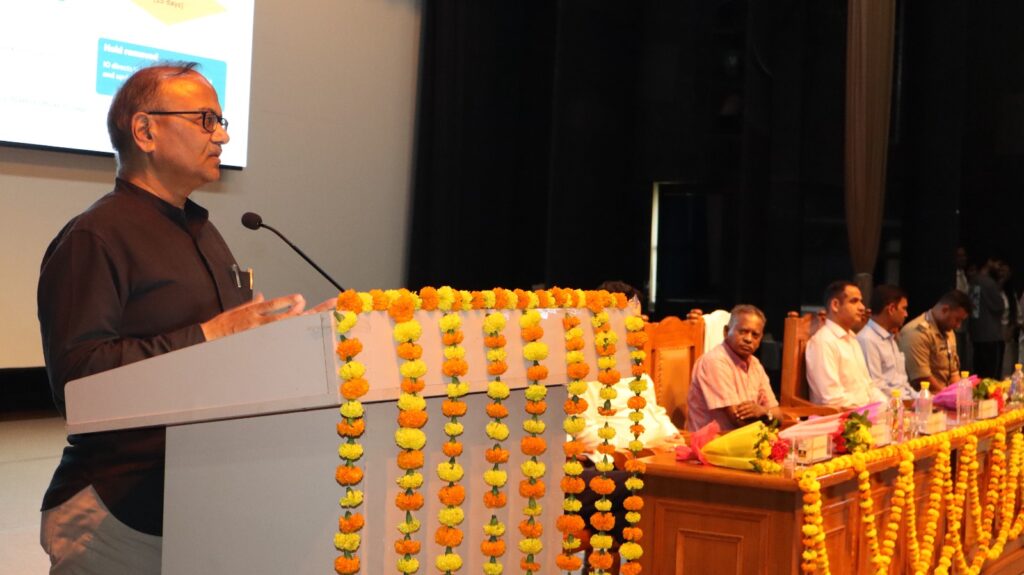
Lucknow: Babasaheb Bhimrao Ambedkar University (BBAU), Lucknow, through its Department of Computer Science and Engineering, organised a Cyber Awareness Programme on October 23 for the university’s teaching and non-teaching staff and employees, in collaboration with the technical team of the Cyber Crime Headquarters. The objective of the programme was to sensitise employees about cybersecurity, prevention of online fraud, data protection, and the safe use of digital platforms. The programme was presided over by the Vice-Chancellor of the university, Prof. Raj Kumar Mittal. Other dignitaries present on the dais included Prof. S. Victor Babu, Dean of Academic Affairs, Mr. Mohsin Khan from the technical team of the Cyber Crime Headquarters, Prof. Shishir Kumar, Director of the University Institute of Engineering and Technology, Prof. Dhirendra Pandey, Head of the Department of Computer Science and Engineering, BBAU, and Programme Coordinator; and Mr. Ashish Pandey and Mr. Rishabh Kaushik from the Cyber Cell. The programme commenced with the lighting of the ceremonial lamp and the offering of floral tributes to Babasaheb’s portrait. This was followed by the rendition of the university anthem. The organising committee welcomed the dignitaries on the dais by presenting them with bouquets. Dr. Mangaldeep Gupta extended a welcome to all the participants. Subsequently, Prof. Shishir Kumar apprised the gathering of the objectives and outline of the programme. Officials and experts from the Uttar Pradesh Cyber Cell participated as resource persons and shared valuable insights on various important aspects of cybersecurity.
In his address, Vice-Chancellor Prof. Raj Kumar Mittal stated that digitalisation, particularly online transactions, has given India a new direction for development. Digital technology has simplified people’s lives and accelerated economic and social activities. Prof. Mittal observed that every technology has two aspects positive and negative and it depends on how we use it and protect ourselves from the potential risks associated with it. He emphasised that awareness is essential to prevent cybercrime. Individuals must exercise control over their emotions and greed and remain mentally composed to avoid making wrong decisions under the influence of temptation, pressure, or haste. Before engaging in any digital activity, it is important to carefully consider its potential consequences, risks, and various aspects.The Vice-Chancellor further stated that effective systems and support mechanisms must be in place to address cybercrime-related issues, ensuring that victims receive timely guidance and assistance in the event of an unfortunate incident. Discussing future initiatives, he expressed the university’s interest in exploring the possibility of signing a Memorandum of Understanding (MoU) with the Cyber Cell of the Uttar Pradesh Government. The initiative would aim to enhance cybersecurity awareness among students, provide them with practical knowledge in this field, and encourage research activities related to cybercrime and digital security. This would not only strengthen students’ technical understanding but also enable them to play an important role in spreading cybersecurity awareness throughout society.

Prof. S. Victor Babu, in his address, stated that cybercriminals are increasingly operating within society and targeting people through various digital platforms. Therefore, everyone must remain alert and aware. Drawing a comparison with the past, he remarked that there was a time when people could leave their homes unlocked and go out without worry; however, circumstances have changed, and greater vigilance regarding security has become necessary. Similarly, in the digital age, people must exercise caution while protecting their personal information, banking details, and online activities. He emphasised that cybersecurity is not merely a technical subject but a responsibility shared by every citizen. Awareness, vigilance, and responsible digital behaviour can play a significant role in preventing cybercrime.
Mr. Mohsin Khan, in his address, stated that people are increasingly falling victim to cybercrime, primarily due to haste, lack of awareness, and greed. Cybercriminals lure individuals through attractive offers, fraudulent links, digital arrest scams, online investment fraud, KYC update scams, and banking-related fraud. He advised participants never to share their banking passwords, One-Time Passwords (OTPs), PINs, or other confidential information with anyone. He also cautioned them against clicking on unknown links, trusting suspicious calls, or making online payments without proper verification. Highlighting the role of the police in preventing cybercrime, he explained that the police investigate cybercrime complaints, collect digital evidence, identify offenders, gather information regarding bank accounts and transactions associated with fraud, and coordinate with relevant agencies to assist victims.
Mr. Ashish Pandey, in his address, discussed various forms of financial fraud and explained how cybercriminals misuse people’s financial information through fraudulent calls, suspicious links, online payments, banking-related scams, and other digital channels. He provided information about the National Cyber Crime Helpline number 1930, emphasising that victims of cyber financial fraud should contact the helpline immediately so that necessary action can be initiated in a timely manner regarding the transaction. Additionally, he provided detailed information about Citizen-Centric Services, the Cyber Swachhta Kendra, the cybercrime complaint mechanism, and the Money Restoration Module, which facilitates the process of recovering money lost to fraud.


During the programme, discussions were held on emerging cyber threats, online financial fraud, data security and privacy, the safe use of email and social media, cyber laws, and the procedure for filing cybercrime complaints. Participants were also informed about measures to remain vigilant against cybercrime, avoid suspicious links and messages, and safeguard their personal and financial information. Emphasis was placed on ensuring the safe use of digital platforms and adopting appropriate complaint and redressal mechanisms in cases of cybercrime. The interactive sessions with experts provided participants with an opportunity to gain practical knowledge of cybersecurity.
At the end of the programme, Prof. Dhirendra Pandey delivered the vote of thanks. Faculty members, administrative and technical staff, research scholars, and students of the university participated in the programme.












 https://www.youtube.com/watch?si=RtToJsBhYBatUrym&v=mOuYNSdhjHA&feature=youtu.be